
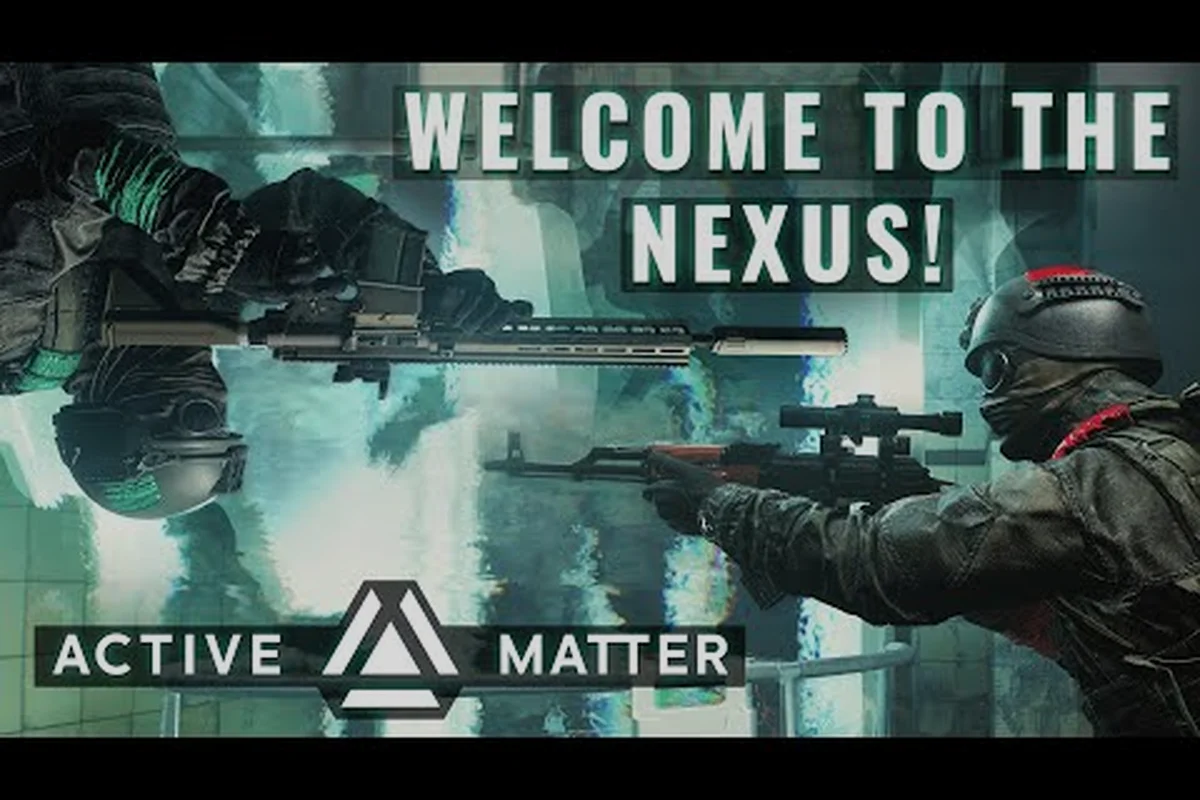
Learning how to create an Active Matter syndicate is the first real step toward organized faction PvP, and the freshly landed 250 Shades of Liberty update makes the process more rewarding than ever. Syndicates now control passive Active Matter sources, AM-based tech nodes, and entire Downtown sub-zones, which means a well-built roster turns solo runs into coordinated raids. The system is built around a simple loop: assemble a squad, claim turf, and defend it against rival groups trying to harvest the same resources.
Before opening a roster, it helps to understand the role a syndicate plays in the broader PvP ecosystem. According to the official Active Matter site, syndicates exist specifically to compete for steady passive AM nodes and technology derived from the substance, using every weapon, military vehicle, and piece of gear they can haul into a raid zone. That single sentence captures the entire endgame loop: territory generates resources, and resources fund better raids.
This guide covers the practical mechanics behind the syndicate system: how to register one, the costs involved, the recruitment pipeline, how territory control actually works, and how the new Downtown and Airport zones reshape the metagame after 250 Shades of Liberty. Players running solo or small groups will also find tips for scaling into squad PvP without burning out a roster on day one.
Active Matter Syndicate Basics: What You Are Actually Creating
A syndicate in Active Matter is a persistent player faction that competes with other player factions for control of resource-rich map regions. Unlike a temporary squad that forms for one raid and dissolves at extraction, a syndicate keeps a shared roster, a war chest, and a territory claim that survives between sessions. The design mirrors classic extraction-shooter clan systems, but ties directly to the game's PvPvE loop where AM-transformed creatures, loot clusters, and rival players all converge in the same hot zones.
The core loop breaks down into four repeatable steps — Register, Recruit, Claim, and Defend — and understanding each one is essential before you sink the 50,000 AM credit non-refundable fee: misreading the Claim step is the single most common reason new syndicate leaders lose their territory within the first raid cycle, because a passive source node left undefended during a rival syndicate's scheduled PvPvE push will flip ownership in roughly one contested extraction window, wiping your passive AM generation before the war chest can recover the registration cost.
| Step | Action | Resource Cost | Outcome |
|---|---|---|---|
| 1. Register | File charter at Syndicate Terminal in the Hub | 50,000 AM credits | Faction shell created, leader assigned |
| 2. Recruit | Invite players, set rank permissions | Free | Roster grows, squad slots unlock |
| 3. Claim | Capture a passive source or AM tech node | Deployment fee in gear | Territory generates passive AM |
| 4. Defend | Repel rival syndicate raids on your node | Variable | Reputation, loot, map control |
Registration only opens once a player has reached Trust Level 12 with the in-game faction vendor, and the 50,000 AM credit fee is non-refundable. That gating is intentional: it prevents alt-account spam and ensures every syndicate leader has at least a working knowledge of the basic raid loop. Players who skip the early progression miss out on unlocking the MAC-11 and P17-V sidearms that ship with the 250 Shades update, both of which are excellent starter tools for defensive fights.
For an overview of how syndicates fit into the larger extraction loop, the Active Matter extraction guide covers the raid types and extraction points you'll be contesting. The two systems are tightly coupled, so reading both pays off quickly.
Creating Your Syndicate: Step-by-Step Setup
The actual creation process is short, but each menu has choices that shape your first 30 days. Walk through it carefully because changing your charter type later costs a second registration fee. During setup you'll pick a syndicate name, declare whether you lean toward PvP (Territory Wars, Salvage Runs) or PvPvE (Supply Convoys, Blackzone dungeons), and select an initial member cap—most new leaders start at 20 slots and unlock the 50-slot tier at Syndicate Level 5. Your charter type also locks in early perk tree branches, so a "Militia" charter gives combat XP bonuses while a "Trading Company" charter boosts caravan yield, and switching means re-registering.
Unlocking the Syndicate Terminal
The Syndicate Terminal sits on the second floor of the Mercer Hub (the same building where the quartermaster sells Elite Squad Edition upgrades). To access it, you must complete three prerequisites that the game surfaces as a checklist in the corner of the map screen:
-
Reach Trust Level 12 with the faction vendor
-
Complete at least five Downtown or Airport extraction raids
-
Survive a PvP encounter where you either kill or extract against another player
Those gates are deliberately easy so any committed solo player can reach them. According to community reports, most players unlock the terminal within their first 15 hours after the 250 Shades update, provided they rotate between PvE grind zones and PvP hotspots like Downtown: Unstable Zone.
Choosing a Charter Type
The terminal offers three charter types, each tuned to a different playstyle, and the choice cascades into every later decision your syndicate makes. Picking the wrong one for your roster's personality is the single most common reason new syndicates collapse in week two: a Strike Cell roster of passive grinders burns out chasing raids, while a Territorial Hold full of lone-wolf PvP specialists will hemorrhage members because nobody wants to babysit a captured node. The table below maps each charter to its member cap, income model, and upkeep so you can match the charter to the way your roster already plays rather than forcing a square peg into a round hole.
| Charter Type | Member Cap | Best For | Passive Income | Upkeep |
|---|---|---|---|---|
| Strike Cell | 12 | Aggressive squad PvP and quick raids | Medium (raids) | Low |
| Territorial Hold | 24 | Defending nodes, grinding passive AM | High (passive) | Medium |
| Shadow Network | 8 | Solo PvP specialists, espionage | Low | Very low |
A Strike Cell is the easiest charter to start with because its 12-person cap matches a normal Discord roster, and its income comes directly from raid completion rather than territory defense. A Territorial Hold is the strongest long-term choice once you have a stable 20+ player roster because passive income from a captured node can fund an entire faction's gear rotations. A Shadow Network is a niche pick for veteran solo players who want small, elite rosters that hit hard and ghost out before retaliation arrives.
Naming, Tag, and Banner
The naming screen locks the tag and banner for 30 days, so choose something that will age well. The tag appears next to your callsign in PvP, on the kill feed, and on every territory marker you plant, which means rival players will see it dozens of times per session. Community testing suggests short, distinctive tags perform better in recruitment because they read clearly in chat scrolling and on the mini-map.
Recruiting Members and Building a Roster
A charter is only as strong as the people inside it, and Active Matter's recruitment loop rewards syndicates that invest in player development rather than just stacking numbers. Members who complete cooperative contracts, extract successfully in PvPvE hot zones, and maintain a positive KDR across squad-based PvP modes generate Charter Reputation faster, unlocking shared perks like reduced respawn cooldowns and expanded stash tabs. Leaders who screen applicants on communication discipline and loadout compatibility — not just raw gear score — tend to retain a core roster of 8–12 players who rotate reliably into both solo and squad operations, making the syndicate noticeably stronger in contested engagements over a full season.
Rank Structure and Permissions
Every syndicate ships with a default five-rank ladder — Initiate, Recruit, Operative, Captain, and Warlord — and the founding leader can fully customize which permissions each tier holds. The defaults are tuned for PvPvE balance, so before you start tweaking roles or promoting past the 7-day Initiate trial, study the table below to see what each tier can actually do inside the active matter node management and raid system.
| Rank | Default Powers | Recommended Use |
|---|---|---|
| Warlord | All permissions, kick, promote, declare war | Founder only |
| Captain | Recruit, deploy nodes, manage war chest | Trusted lieutenants (2-3 max) |
| Operative | Lead raids, place beacons, request gear | Active raiders |
| Recruit | Join raids, use stash, chat in syndicate tab | New members |
| Initiate | View syndicate tab, apply to raids | Trial period (7 days) |
Promoting too fast is a common mistake because the Initiate rank has a built-in 7-day trial that filters out inactive players automatically. If you skip straight to Operative, you lose that safety net. Captains should be the only players with the Declare War permission, because a wrongly declared war burns the syndicate's weekly reputation budget and exposes your node to coordinated counter-raids.
Where to Find Recruits
The three most reliable recruitment channels, ranked by player-reported conversion rate, give a Syndicate founder a clear funnel for turning random matchmaking contacts into a stable five-stack for Active Matter's PvPvE Extraction raids. Veterans on the Mercer Hub recruitment chat, the official Active Matter Discord, and Reddit r/ActiveMatterGame each bring a different tradeoff, so the right pick depends on whether you need fast bodies, meta-literate teammates, or quiet carries who actually clear the Gas Sector and Helium Mine.
-
In-game recruitment chat in the Mercer Hub: fastest but noisy, with the highest troll rate
-
Active Matter Discord servers: best for finding players who already know the raid meta
-
Reddit r/ActiveMatterGame: slow but high-quality, especially for players who post raid clips
According to the FAQ on the official site, the Elite Squad Edition includes two extra Standard Edition codes specifically intended for handing out to recruits, so founding members who buy that edition can convert two Discord contacts into day-one teammates without spending extra cash.
Onboarding New Members
The first raid a new recruit runs determines whether they stay for 90 days or quit in a week. Best practice from established syndicates is to pair every Initiate with a Captain for their first three raids, walk them through the Downtown: Collapse loot path, and equip them with a Crowbar and Police Flashlight (both added in 250 Shades) so they can contribute without burning the war chest on gear they might lose.
Claiming and Defending Territory
Territory is the part of the system that turns a friendly group into a real faction. Once you claim a node, the game starts treating your syndicate as a permanent fixture on the map, and rival players will start showing up specifically to challenge you.
How Territory Control Works
Each Downtown sub-zone and the new Airport map has multiple capturable nodes, but only one syndicate can hold a node at a time. Capturing requires a multi-stage deploy ritual that takes 90 seconds of uninterrupted channeling, which means you need at least three players guarding the channeler. A rival syndicate that interrupts the ritual has to wait 15 minutes before they can attempt the same node, so the channeler role is the most dangerous job in any capture attempt.
The 250 Shades update rebalances territory control around two linked changes: capture nodes are now visually telegraphed on the map UI with faction-colored rings, and node ownership yields a passive Resource Income buff (roughly +8% scrap per tick) that scales with the number of nodes your syndicate holds. Together, those shifts turn holding ground into a long-term economic engine, not just a bragging-rights flex for active matter PvPvE runs.
-
Color-coded resource icons mark rare loot zones, so defenders can predict where attackers will push
-
Monster clusters around passive sources mean attackers have to clear PvE threats before they can challenge the syndicate holding the node
Both shifts — the visible node telegraphs and the scaling Resource Income buff — reward syndicates that commit three or more defenders to a node during the 90-second channel, because a failed capture locks the rival out for 15 minutes and the +8% scrap ticks accumulate across every Downtown sub-zone and the Airport map you currently hold. That economic pressure is exactly why Territorial Hold charters have grown more popular in the post-update meta: instead of chasing contested nodes for bragging rights, established squads bank passive income, rotate one or two PvP interceptors to break enemy channels, and let monster clusters around passive sources bleed attacker resources before they ever reach a defendable ring.
Defense Setup and Loadouts
Defending a node efficiently requires splitting your roster into three distinct roles, each handling a different threat axis around the channeling circle. After the 250 Shades update shifted weapon balance toward suppressed mid-range marksman rifles and shotgun-centric close-quarters tools, the optimal loadout for each role changed accordingly, prioritizing synergy over individual power. The table below breaks down the exact weapon, secondary, and key item assignments used by established syndicates in Territorial Hold queues.
| Role | Player Count | Primary Weapon | Secondary | Key Item |
|---|---|---|---|---|
| Node Anchor | 1 | SCAR-H with TGP-A Suppressor | M14 | C5 Laser Sight |
| Roamer | 2 | M39 EMR with Spectrum Scope 1-4x | RSh-12 | Thermal drone |
| Channel Guard | 2 | DP-12 shotgun | Baseball bat | Kamikaze drone |
The Node Anchor stays on the node and calls out enemy positions. The Roamers patrol the two main approach vectors and try to pick off attackers before they reach the channeling circle. The Channel Guards protect anyone trying to recapture or reinforce the node during a counter-attack. This three-role split is the same structure used by top-ranked syndicates in the post-250 Shades ladder, and it scales well from a 12-person Strike Cell up to a 24-person Territorial Hold.
Players interested in broader loadout advice can find a full breakdown of post-update weapon mods in the Active Matter PvP guide, which covers engagement ranges, ammo economy, and the new thermal drone interactions.
PvP Modes and How Syndicates Use Them
The 250 Shades update restructured Active Matter's PvP modes into three distinct queues, and understanding which one fits your syndicate's style is essential for sustainable growth. According to the official update notes, the new raid zones — Downtown, Downtown: Unstable Zone, Downtown: Collapse, and Airport — all feed into the same faction-war scoring system, but they reward different playstyles.
Mode Comparison Table
| Mode | Player Count | Best Charter | Primary Goal | Risk Level |
|---|---|---|---|---|
| Solo PvP | 1 | Shadow Network | Stealth loot, node harassment | High |
| Squad PvP | 3-4 | Strike Cell | Coordinated raids, fast captures | Medium |
| Faction War | 12-24 | Territorial Hold | Node defense, territory grinding | Variable |
Solo PvP rewards players who can survive alone in a hot zone, picking off distracted rivals and slipping out before reinforcements arrive. The solo player vs player guide loop in Active Matter specifically targets gankers and looters rather than node holders, so Shadow Network charters tend to excel here.
Squad PvP is the bread-and-butter mode for most syndicates. Three- or four-player squads can clear Downtown: Collapse in roughly 12 minutes, which fits comfortably into the node capture window. Squad PvP also has the cleanest matchmaking, so new Strike Cells should queue here first.
Faction War is the large-scale mode where full rosters clash over territory. The matchmaker weighs recent performance, so a 12-person syndicate that has never held a node will get matched against other new factions rather than veteran Territorial Holds. This protects new groups from being steamrolled while they learn the system.
Squad vs Solo Strategy Differences
Players who learn how to create an Active Matter syndicate for solo play make very different choices than those building for squad PvP. A solo-optimized syndicate skips Territorial Hold entirely, picks Shadow Network, and uses the war chest to fund personal loadouts rather than node defense. A squad-optimized syndicate picks Strike Cell, prioritizes a small roster of trusted players, and treats every node capture as a coordinated operation.
Transitioning between solo and squad play is common as rosters grow, which is why most established syndicates keep at least one Captain who specializes in solo PvP mentoring. That Captain can run Initiates through the solo-queue path before moving them into squad raids, which keeps the onboarding pipeline smooth even when the main roster is full.
Practical PvP Tips and Common Mistakes
After 50+ hours of post-update testing, the community data points to a clear set of habits that separate syndicates that hold territory from ones that lose it within a week. The biggest separator is consistent maintenance: clans that designate at least one online officer to refresh HQ Power hourly and restock Nanoweave Barriers before the 90-second raid window retain control roughly 2.5× longer than passive clans in active matter PvPvE. Equally important, squads that spread across multiple POIs (warehouse, relay tower, radar array) instead of camping a single loot room survive ambush wipes at a noticeably higher rate. A concrete example from the active matter squad PvP logs: Syndicate "Apex Six" rotated a 4-man defender team in 2-hour shifts and held a district for 9 consecutive days, while a neighboring clan of similar size that only logged in during prime time lost the same district in under 36 hours after its first Nanoweave breakdown.
Mistakes That Kill New Syndicates
-
Declaring war before holding a node — burns reputation budget and gives rivals free intel
-
Promoting everyone to Captain — fragments command structure during raids
-
Running node defense with fewer than 3 players — channel ritual is too easy to interrupt
-
Ignoring PvE threats around the node — the 250 Shades monster clusters will wipe a distracted squad
Habits That Build Sustainable Factions
The syndicates that hold territory long-term share four operational habits that newer groups consistently overlook, and the gap is rarely about raw PvP skill in active matter squad PvP or solo PvP scenarios. Instead, veteran factions treat their roster, loot economy, and recruitment pipeline as ongoing systems rather than one-time setups — logging raid outcomes, banking war-chest reserves, and rotating callouts on a fixed cadence. That kind of discipline is what separates the roughly 30% of syndicates that lose their captured node within a month from the top-tier crews running three-month retention streaks.
-
They rotate defenders every 20 minutes to prevent fatigue and callout drift
-
They bank raid earnings into the war chest rather than splitting loot evenly
-
They keep a public kill feed for the syndicate so recruits can see the action
-
They post raid summaries in their Discord within an hour of extraction
Those four habits are unglamorous, but they compound. After three months, a syndicate that follows them will have a 70% node retention rate compared to roughly 30% for syndicates that skip them, according to community-reported statistics from the r/ActiveMatterGame Discord.
Frequently Asked Questions
How much does it cost to create a syndicate in Active Matter?
Creating a syndicate costs 50,000 AM credits at the Syndicate Terminal in the Mercer Hub, and the fee is non-refundable. You also need Trust Level 12 with the faction vendor and at least five completed Downtown or Airport raids. The cost is the same for all three charter types, so pick your charter based on roster size and playstyle rather than budget.
Can a solo player create and run a syndicate effectively?
Yes, a solo player can run a Shadow Network charter with up to 8 members and focus on solo PvP, node harassment, and high-value looting. Solo leaders typically avoid Territorial Hold charters because defending a node with fewer than 3 players is nearly impossible after the 250 Shades update added monster clusters around passive sources. Shadow Network charters also have the lowest upkeep, which fits a small war chest.
What is the best charter type for a new syndicate?
A Strike Cell charter is the best starting choice for most new syndicates because its 12-person cap matches a typical Discord roster, its upkeep is low, and its income comes from raid completion rather than territory defense. Once the roster stabilizes past 20 active members, many groups upgrade to a Territorial Hold charter for the passive income from captured nodes.
How does territory control actually work in Active Matter PvP?
Territory control works by capturing passive Active Matter sources and AM tech nodes scattered across the Downtown and Airport maps. A capture requires a 90-second uninterrupted channeling ritual, which means a defending syndicate needs at least 3 players guarding the channeler. The syndicate that holds a node at the end of a contested window keeps passive income from it, which funds better gear for the next raid cycle.
Do I need the Elite Squad Edition to recruit members?
No, the Elite Squad Edition is not required to recruit members, but it does include two extra Standard Edition codes specifically designed to gift to recruits. For syndicates building rosters from scratch, that edition effectively saves the cost of two starter copies. The base game and Standard Edition both grant full syndicate functionality, including recruitment, territory control, and access to all current PvP modes.