
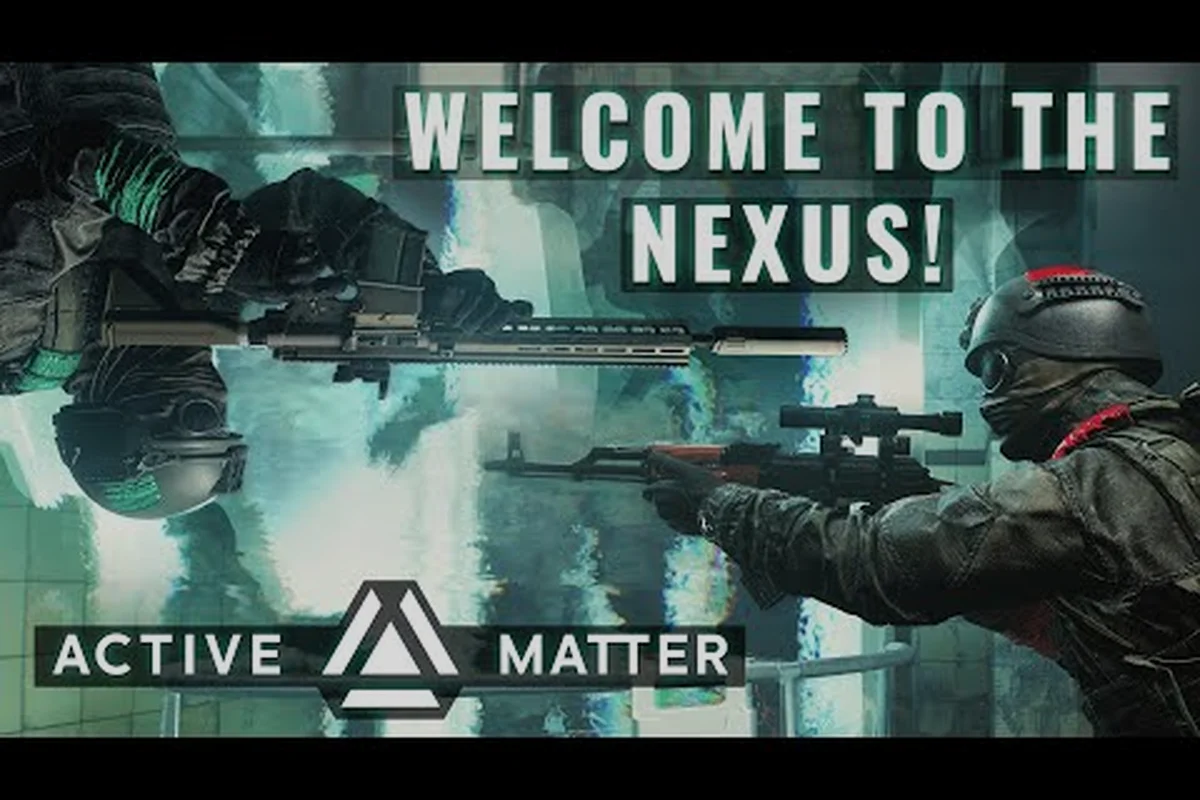
Player versus player combat decides who walks out of a quantum unstable zone with a full stash, and who respawns empty-handed. This active matter PvP guide breaks down the syndicate system, loadout choices, and the fight tactics that turn a contested extraction into a clean getaway, drawing on mechanics confirmed by the official Active Matter website and the Operation 250 update notes.
Understanding the Syndicate System in Active Matter
Syndicates are the player-run factions that turn a solo extraction into a territory war. According to the developer's own description on the official Active Matter site, syndicates compete for steady passive AM nodes and the technology built from them, bringing every weapon, military vehicle, and piece of field gear they can carry in or assemble during a raid. That sentence captures the entire PvP loop: claim the resource, defend the claim, and deny it to rival groups.
How Syndicates and Syndicate Wars Work
Every operator belongs to one of several named factions, each with its own roster of leadership, base locations, and uniformed cosmetics. The PvP layer activates when two or more syndicates contest the same raid zone, because the loot tables inside those zones are shared, not instanced. Once a rival squad is detected, the encounter shifts from PvE to PvPvE, and any active matter cluster becomes a kill box.
Syndicate vs. solo play — core differences
| Aspect | Solo / Unsyndicated | Syndicate Member |
|---|---|---|
| Resource access | Random spawns only | Passive AM sources, syndicate stash |
| Backup in PvP | None | Teammates, shared vehicles, base turrets |
| Insurance on death | Lose everything carried | Partial stash recovery via syndicate bank |
| Territory control | None | Vote on contested zones, schedule raids |
| Crafting depth | Field-craft only | Full bench access at syndicate base |
Community data from the official patch notes (Operation 250 Shades of Liberty) confirms that rare loot zones are color-coded on the map, and rival syndicates can read those same markers. That means every high-value icon is also a PvP waypoint.
How to Join a Syndicate and Pick the Best One
The active matter how to join syndicate flow runs through the in-game menu, not the lobby browser. Open the Faction tab, browse the open-roster syndicates, request an invite, and wait for a recruiter's approval. Smaller factions reply within minutes; large alliances may take a full day because they gate entry behind a vet recommendation.
Picking the active matter best syndicate comes down to three questions: schedule overlap, gear specialization, and territory preference. A casual player who raids at odd hours should join a syndicate with global recruitment, while a hard-core grinder benefits from a faction that already controls the zones they want to farm. Reputation transfers between wars but resets if you defect twice in a single season, so treat the first pick as a long-term commitment.
For a deeper walkthrough on the recruitment screen and the contract you sign, the syndicate creation walkthrough covers every toggle on the application form, including the activity-check opt-in that flags you as inactive after 72 hours without a contract contribution and the territory-tax toggle that routes 5% of your war-zone loot to the faction treasury.
Choosing a PvP Loadout That Wins Contests
Loadouts decide engagements before the first bullet flies. The Operation 250 update dropped a long list of viable tools, including the RSh-12 revolver, SCAR-H battle rifle, M39 EMR DMR, and the DP-12 shotgun, alongside new melee options like the Crowbar, Pry bar, and Baseball bat. Picking the right mix depends on squad size, map density, and how aggressively your syndicate contests the point.
Primary and Secondary Weapon Pairings
A balanced PvP loadout pairs a mid-range primary with a close-quarters secondary, because most extraction fights collapse to under 30 meters when both sides push the same doorway. The table below maps common pairings to the situations they dominate.
| Primary | Secondary | Melee | Best Fight Scenario |
|---|---|---|---|
| SCAR-H | MAC-11 | Crowbar | Open-zone mid-range duels |
| M39 EMR | RSh-12 | Police Flashlight | Long corridor sightlines |
| M14 | P17-V | Baseball bat | CQB building clears |
| DP-12 | P17-V | Pry bar | Doorway stacks and ambushes |
| M14 (suppressed) | MAC-11 | Crowbar | Stealth raids on rival stashes |
Per the official update notes, the new attachments like the TGP-A Suppressor, Spectrum Scope 1-4x, and C5 Laser Sight reshape those pairings. A suppressed M14 with the 1-4x scope becomes a recon sniper that can drop a looter before they know the bullet came from their own squad.
Gear, Drones, and Armor Choices
Gadgets and armor are the second layer of the active matter PvP tips meta. The patch introduced two drones that matter for PvP: the Kamikaze drone for vehicle denial and the Thermal drone for spotting concealed operators behind cover. Pair those with medium armor rather than heavy, because mobility wins more contested extractions than raw hit points once a third-party squad rolls in.
Players who want a fuller breakdown on weapon-tier math and the armor trade-off curve can read the extraction PvP loadout deep dive, which ranks the same weapon pool by TTK and recoil pattern.
Fight Tactics That Win Syndicate Wars
Raw aim only carries fights when nobody flanks. The active matter syndicates explained combat model rewards squads that control sightlines, vehicle routes, and the high ground around passive AM sources, because the map is full of hard cover and broken line-of-sight geometry. Treat every extraction point as a five-step problem and the wins stack up.
The Five-Step Contested Extraction
| Step | Action | Why It Matters |
|---|---|---|
| 1. Recon | Launch the Thermal drone before crossing the threshold | Spots defenders behind concrete and sheet metal |
| 2. Cut noise | Equip the TGP-A Suppressor on the primary | Removes third-party pings from rival squads |
| 3. Stack entry | Pair a DP-12 runner with a SCAR-H overwatch | Covers the doorway and the back escape route |
| 4. Deny the stash | Drop a Kamikaze drone on the rival vehicle | Prevents hot extraction under fire |
| 5. Extract fast | Swap to the MAC-11 for the run to the chopper | Higher mobility, faster draw for last-second threats |
That five-step loop is the backbone of the active matter syndicate wars playbook — recon with the Thermal drone, fit the TGP-A Suppressor, stack a DP-12 runner under SCAR-H overwatch, deny extraction with a Kamikaze drone on the rival vehicle, then swap to the MAC-11 for the chopper sprint. Skip any single phase, from pre-entry pings to the final MAC-11 sprint, and a coordinated enemy squad will collapse the doorway, recover the contested loot, and reset the engagement on their terms.
Solo vs. Squad Tactics
Solo players cannot hold a passive AM source, so they play the scavenger role: hit a contested zone only when two syndicates are already bleeding each other, then slip in to grab loose loot during the respawn timer. The active matter how to join syndicate decision becomes critical here, because even a one-person cell inside a larger faction unlocks stash insurance and a quick-revive beacon.
Squad players run the opposite playbook. They push the contested zone first, lock down the high ground with the Spectrum Scope 1-4x, and force the rival team to either rotate or feed kills. A coordinated four-man running the M14 + MAC-11 + Crowbar mix can hold a passive source for two full extraction cycles if they pre-place the Thermal drone on the flank.
Newer solo players who want the full path mapped out can follow the broader survival framework in the solo operator guide, which covers early-map routing, stash insurance timing, and the rotation windows between AM respawn ticks that let a single scavenger extract without triggering crossfire from the two warring syndicates.
Map Control, Vehicles, and Territory Strategy
Vehicles and map control extend the active matter PvP guide beyond the 1v1 duel. Military transports can roll into a passive source before the rival squad finishes gearing up, and the new Operation 250 zones — Downtown, Downtown: Unstable Zone, Downtown: Collapse, and the Airport with its gravity-locked plane — each reward a different vehicle and entry pattern.
Zone-by-Zone PvP Approach
| Zone | Vehicle of Choice | Entry Path | Key Risk |
|---|---|---|---|
| Downtown | Light APC | Underground parking ramp | Tight chokepoints favor shotguns |
| Downtown: Unstable Zone | Motorbike | Side alley to rooftop | Gravity pulses knock riders off |
| Downtown: Collapse | Infantry only | Stairwell under rubble | No vehicle cover, grenades dominate |
| Airport | Transport truck | Cargo tunnel to the plane | Long sightlines favor the M39 EMR |
Map unlocks and base-tier progression that gate access to those zones are detailed in the progression and map unlock guide, which lines up the prerequisite missions for each new area — for example, Downtown's underground parking ramp only becomes a legal entry path once your syndicate clears the Collapse prerequisite chain, and the Airport cargo tunnel typically requires the Unstable Zone badge before Transport trucks can spawn reliably as the meta vehicle of choice.
Vehicle Denial and Counter-Play
Rival syndicates will run vehicles, so every PvP squad needs a denial plan. The Kamikaze drone is the cleanest counter, but a well-placed DP-12 shot to the engine block or a sustained SCAR-H burst to the tires works just as well. Never chase a vehicle on foot into an open field; rotate to cover, let them dismount, and pick the fight on your terms.
Territory control extends to the syndicate base after the raid ends. The base's defensive layout, turret placement, and stash storage all feed back into the next war, so treat base upgrades as a PvP investment, not a cosmetic side project.
Frequently Asked Questions
What is the first step in the active matter PvP guide for new players?
Start by joining an open-roster syndicate through the in-game Faction menu, then run at least five co-op raids with squadmates before queueing for contested zones. The early reps teach the map flow, the stash insurance system, and the callouts your faction uses during firefights.
How do active matter syndicates explained by the developers actually fight?
Syndicates contest passive AM sources and rare loot zones by running coordinated squads, vehicles, and drone support into the same PvPvE raid. According to the official Active Matter page, the faction that controls the source at extraction wins both the resource and the right to tax rival operators for the next cycle.
Which syndicate is the active matter best syndicate for a returning player?
The active matter best syndicate for a returning player is the one that already controls the two or three zones you want to farm. Check the territory map before applying, and pick a faction whose raid schedule overlaps with your play hours; reputation, gear specialization, and roster size matter more than the faction name.
What is the strongest active matter PvP tips loadout after the Operation 250 update?
The strongest post-patch loadout pairs a suppressed M14 with the Spectrum Scope 1-4x for mid-range picks, a MAC-11 for the close-quarters finish, and a Crowbar for silent melee takedowns. Add the Thermal drone for recon and the Kamikaze drone for vehicle denial, and the kit covers every contested extraction scenario the active matter PvP guide covers above.
How do you win active matter syndicate wars as a solo operator?
Solo players win by waiting for two large syndicates to engage, then slipping into the contested zone during the respawn window to grab loose loot and extract before either side can reorganize. Staying unaligned is viable, but joining a small syndicate for stash insurance and a quick-revive beacon usually produces a better survival rate over a full season.